
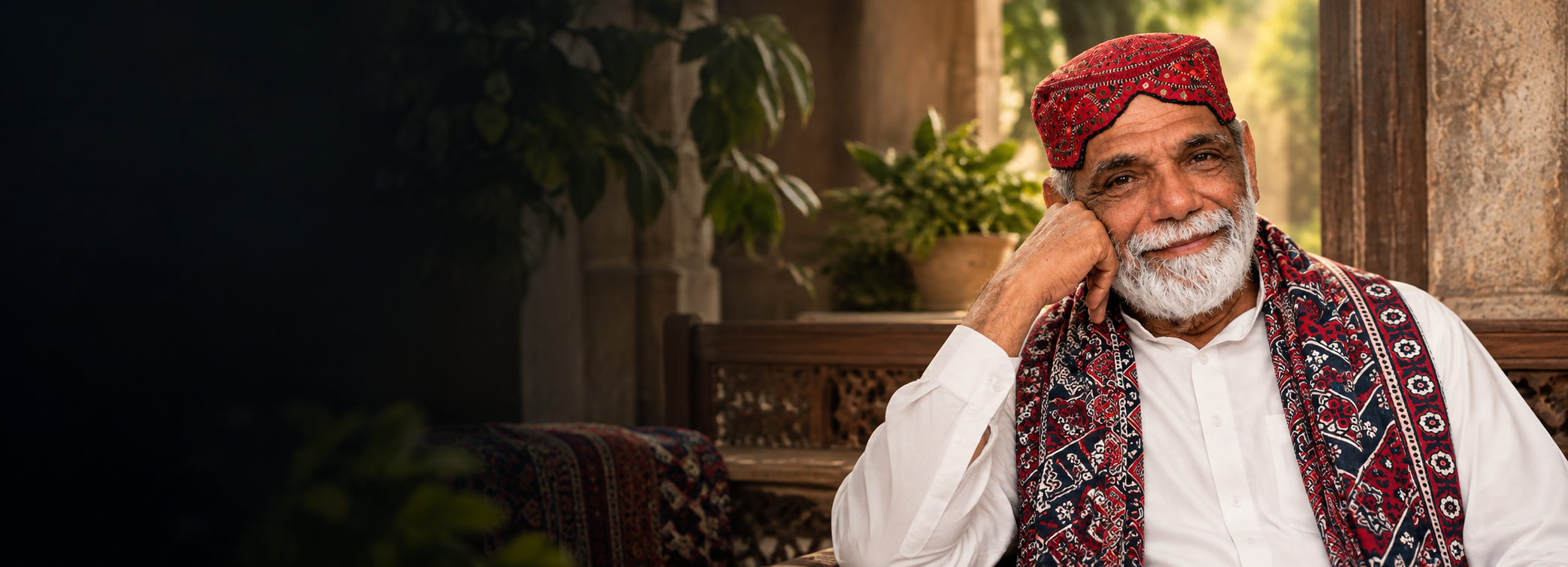
QALANDAR PAK RA
A Servant of Divine Love
Hazrat Makhdoom Syed Safdar Ali Bukhari (RA), lovingly known as Qalandar Pak, was an exalted Sufi, spiritual guide, and a man of profound wisdom whose life was devoted to Divine love, humility, and selfless service to humanity.
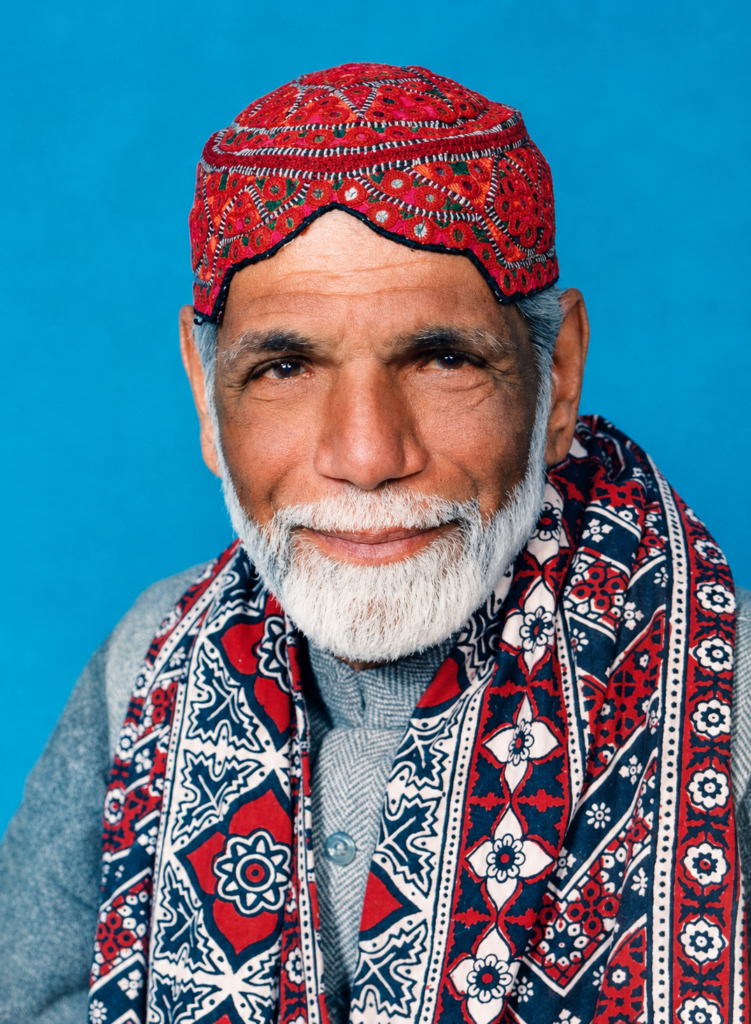
A Life of Love, Compassion & Service to Humanity
He followed the spiritual path of Malamatia, associated with humility, self-purification, and freedom from the desire for praise or recognition. His spirituality was not confined to words or outward appearances; it was reflected in how he lived, how he served, and how deeply he cared for people in pain.
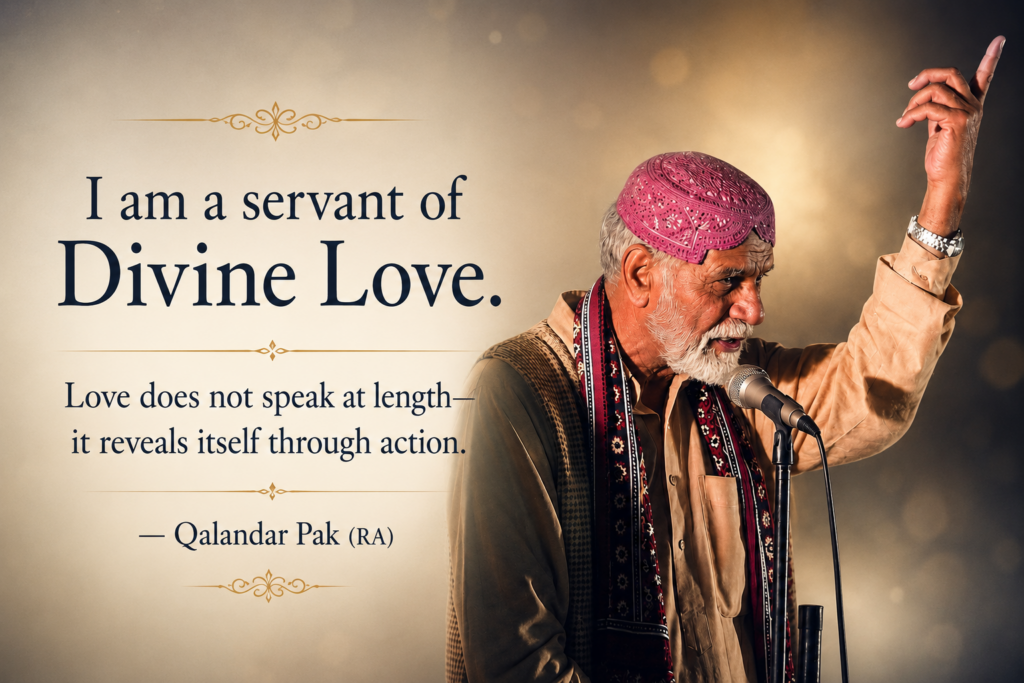
A Mission Rooted in Love
At the heart of Qalandar Pak’s teachings was love.
His concern for humanity reached beyond divisions of religion, nationality, caste, colour, or social status. He called people toward compassion, humility, peace, and love for one another.
One of his teachings beautifully expresses this philosophy:
“Do resort to love… love… love. If you are unable to love, then do not hate as well.”
For Qalandar Pak, love was not merely something to speak about.
Love had to become action.
Serving Humanity Through Action
Qalandar Pak’s humanitarian concern extended into people’s everyday lives.
He supported efforts for the development of underserved communities, including schools, dispensaries, medical assistance, community development, and access to basic necessities. He encouraged doctors and others with knowledge or resources to give their time and abilities in service to people in need.
During a visit, for example, plans were made to establish a free clinic, and a number of doctors accompanied him. On the same visit, members of the local Christian community invited Qalandar Pak to inaugurate their church. He accepted their invitation and joined them—an example of the openness with which he approached people beyond religious boundaries.
His mission was therefore not simply to teach humanity about compassion.
It was to live compassion.
His Concern for the Suffering Human Being
Qalandar Pak was deeply concerned with those who were suffering.
His concern encompassed physical illness, emotional and psychological distress, addiction, despair, inner restlessness, and the many difficulties that can leave a person disconnected from hope.
This concern was not expressed through words alone. He spent years personally exploring different ways of helping people, even when his unconventional approaches attracted criticism and opposition.
Accounts from an earlier stage of his work describe his efforts with young people affected by addiction and others experiencing different forms of distress. They also describe his experimentation with Arifana Kalam, music, and Dhamaalin his search for ways to benefit suffering people.
His methods were questioned and strongly criticized. Yet rather than asking people to accept his work unquestioningly, Qalandar Pak invited people of knowledge and his critics to examine it, investigate it, and participate in further research.
Behind these changing methods, however, one purpose remained constant:
the suffering human being.
Qalandar Pak often expressed this concern in a simple message:
“remove sorrow from the faces of those who are suffering.”
A Seeker Who Continued to Explore
Qalandar Pak’s concern for humanity continually pushed him to explore more deeply.
He was willing to question, experiment, face criticism, and move beyond earlier approaches as his work developed. During an earlier period of his research, he spoke about concepts such as concentration, frequency, and what he described as “radiation,” while exploring how focused listening could affect the human being.
But the methods themselves were never the ultimate purpose.
What remained constant was his search for a way to serve suffering humanity and awaken the deeper relationship between the human being, the soul, and the Creator.
That journey would eventually become centered on listening to The Ultimate Remedy—the Divine Message—with complete concentration and the heart fully attentive to the Creator.
The detailed development of this research is explored in the section: The Origin of The Ultimate Remedy.
From Receiving Hope to Giving Hope
Perhaps one of the most beautiful aspects of Qalandar Pak’s mission was what he expected from people after they received help.
He did not want the journey to end with one’s own relief.
He expressed this beautifully:
“Listen to The Ultimate Remedy. When you become well and begin to smile again, use your smile to bring others back to life.”
The message was simple but profound:
Receive hope — then give hope.
Find your smile — then become a reason for someone else to smile.
Receive love — then carry love to another.
Find light within — then become a light for someone in darkness.
In this way, receiving became a responsibility to give.
A person who had experienced hope could become hope for another.
And the mission could continue from heart to heart.
Beyond Boundaries
Qalandar Pak’s vision was not limited to one community or one group of people. His concern was for the human being.
The same spirit can be seen throughout his humanitarian work: reaching people across social and religious boundaries, encouraging service to those in need, and continually emphasizing love over division.
At the centre of this vision was the understanding that Divine Mercy cannot be confined by the boundaries human beings create between themselves.
This universal concern for humanity would eventually become one of the defining principles of the mission carried forward through The Ultimate Remedy.
His Legacy
Qalandar Pak’s legacy cannot be understood through his research alone.
The research was one expression of a much greater vision:
the transformation of the human being through love, Divine connection, inner awareness, and service to others.
He remained committed to the betterment of humanity despite criticism and opposition. Again and again, his message returned to love, compassion, hope, and responsibility toward those who suffer.
And when the time came for this work to continue beyond him, Qalandar Pak did not leave its future undefined.
He recognized, guided, and prepared the person he chose as his spiritual heir—his Waris:
Syed Shakir Uzair, lovingly known as Syed Baba.
The research would be entrusted to his heart.
The responsibility would become his.
And the mission would continue.
From one heart to another.
From love into service.
And from service—to humanity.